VIDEO ART
A selection of video art works to highlight the aesthetics and meaning of the artist's research. Each video features the body in action. They are performances that through action investigate and give form to equal feelings: abandonment, pain, love in search of a transformation of the soul and spirit. The videos are carnal prayers, personal rituals to activate a process of catharsis and knowledge.
The techniques used reflect on time and the ‘I’: slow motion, reverse time, datamoshing, freeze. The videos are digitised native videotapes (VHS), mixed with a 1990s video mixer (Roland V8) and in 4K. Where present, the text and soundtrack are entirely created by the artist. The words are inspired by existentialist philosophy and religion. The music is composed with a synthesiser and a kaos oscillator. Particular attention is paid to the appearance of colour and light in a pictorial sense in order to communicate moods symbolically.
THE ARTIST DIES IN ART | SELF-PORTRAIT
4K VIDEO 9:16 | COLOUR | SOUND | 2:37 sec. | 2025
Maschera e musica originale M. Balbi Dipalma
In the video The Artist Dies in Art, within an existentialist philosophical vision, the performer problematises the relationship between Being and Art, drawing on Greek metaphysical origins. The investigation of Being, within the performer's poetics, is the very search for Art, for the Self and the ego in art. In this light, the golden mask of archaic funerary tradition (think of the mask of Agamemnon and the masks of the Egyptian pharaohs), as well as the title given to the work, takes on multiple meanings: it is the death of the artist's ego in the search for Art and its rebirth in the sacred light of Art itself, as a sacred vehicle of connection with the deepest layers of Being; the catharsis of one's suffering in creation, towards a state of rebirth and enlightenment; the search for an end to human suffering in robotics and AI; the loss of human fragility, in a sort of technological ataraxia with the advent of AI. This gives rise to a broad reflection on the ethos and meaning of his artistic research and the resonance that art can have. Thus, in the sound composition, the sound of magnetic resonance is added to contrast with the lyricism of the piano. The artist creates by exploring his body, his soul, his identity, to be reborn in the light of knowledge.
ALLEGORY OF LOVE
ULTRA 4K VIDEO 9:16 | COLOUR | SOUND | 00:54 sec. | 2026
Original text and music M. Balbi Dipalma
““Oh my love, it is not what I love that makes me love love, but the love I love that makes me love.”
Ti Amo.”
It is not the object of love that makes love Love. It is the energy we create and invest in nurturing care and presence that fills the heart and makes the physical body and pathos the blue measure of the soul. Like the petals of a rose, repeated acts of love towards another, increasingly unconditional—that is, not dependent on the object—reveal the primal love that resides in being.
KAIROS | SELF-PORTRAIT
VIDEOTAPE VHS | COLOR | SOUND | 2:30 sec. | 2024
Original text and music M. Balbi Dipalma
Winner of the Etereart 'Visions - International Art Prize 2024' | Salerno
Finalist 'Modigliani Prize 2024' installation category | Rome
Contemporary artist Marco Balbi Dipalma explores the essence of his being and existence through one of the most powerful and immediate means of expression: video art. It allows him to capture the complexity of feelings and emotions, offering the viewer a window into his inner world. In the video performance, the artist records in real time all the movements produced by the body during a long wait. Throughout the duration of the video, the phrase "my time is time for abandonment" is continuously repeated, thus becoming a hypnotic mantra.
The repetition invites the viewer to reflect on his or her own essence, the concept of time, knowledge and spirituality, and the fusion of sound and words make the work an intellectual experience. Another important element is the use of the colour red, which is present both in the jacket and on the floor, and is the symbol of spiritual and carnal contemplation. The performance is not just a visual representation but an emotional journey that expands the understanding of the self and the world.
From the Catalogue "International Art Prize Visions"
MARIANGELA BAGNOLO | CURATOR
DE PROFUNDIS | AFFRESCO | TRIPTYCH
VIDEO DIGITISED FROM VHS | 16:9 | FEEDBACK LOOP | SOUND | COLOUR | 2024
Original text M. Balbi Dipalma
PARATISSIMA' selection 2024
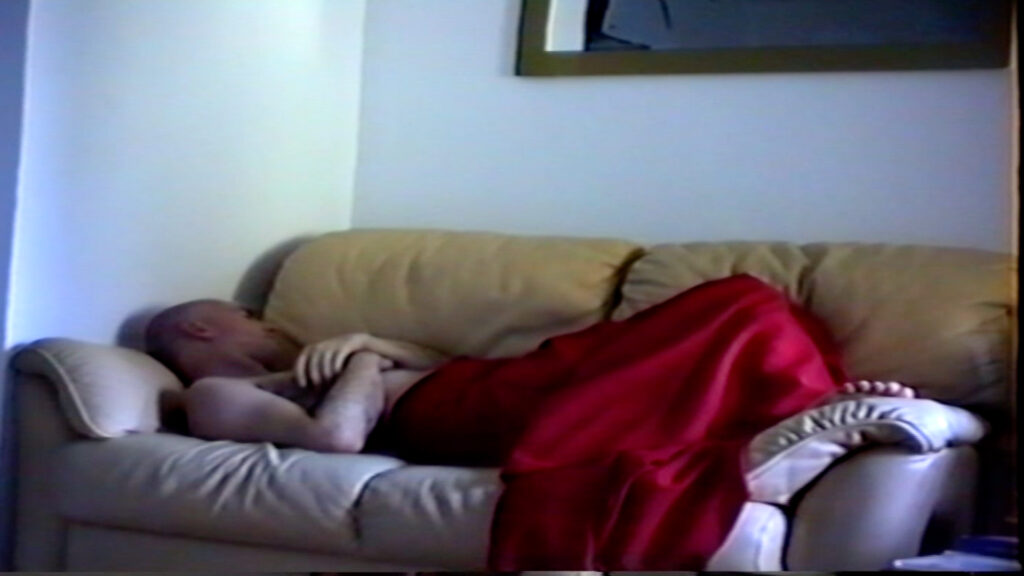
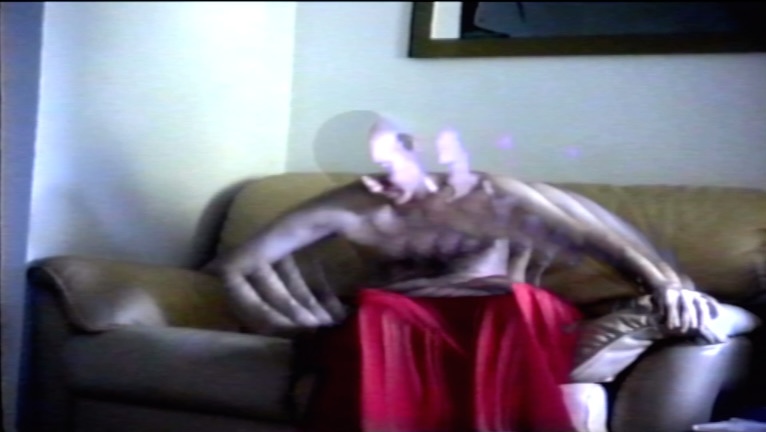
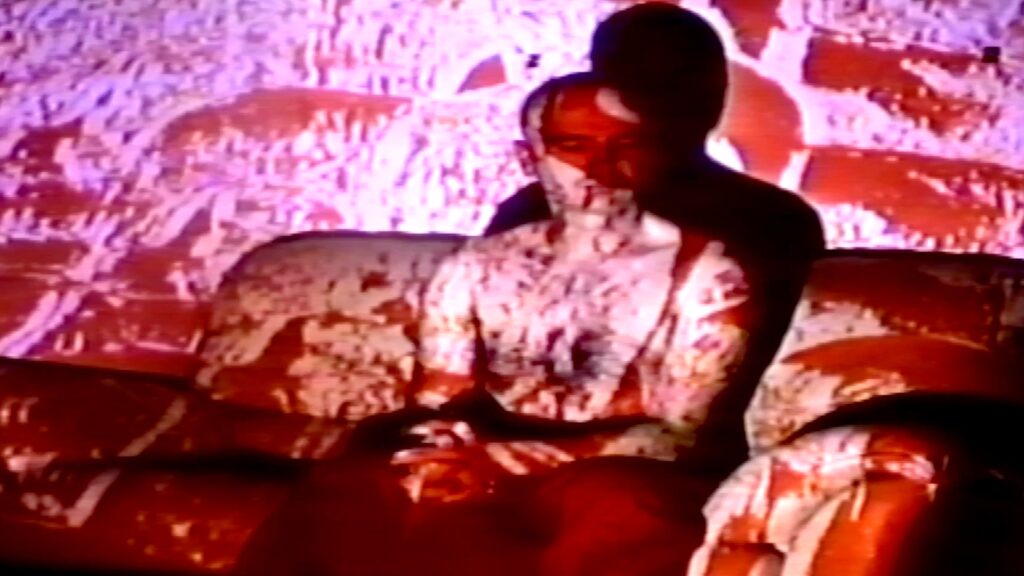
Part. I | Part. II | Part. III
Through a video installation, Marco Balbi Dipalma interrogates the essence of abandonment. The term and concept that Balbi Dipalma analyses possesses a dual value, since it belongs to the sphere of solitude - sought independently or achieved due to social estrangement - but also in the sphere of faith, in which the utmost value of the ideal of abandonment towards what cannot be seen is enshrined. This concept underlies the artist's work, which is poetic, hypnotic, in which horror vacui is provided with a voice that materialises through the artist himself.
From the catalogue 'Like the skin that hides me' Paratissima" 2024
M. BRONZINO | CURATOR
RITUAL SONGS
VIDEO 4K VIDEO | 16:9 | COLOUR | MUTE | LOOP | REAR PROJECTION ON CANVAS OR WALL OR 4K LCD TV | 2022/23
COLLECTIONS OF 7 VIDEOS: TRASFIGURAZIONE, COMPIANTO, AGONIA, PIETA’, DERISIONE, ASCENSIONE, RESURREZIONE
Trasfigurazione selected "Biennale d'arte di Sondrio".
RITUAL SONGS are a collection of videos that question suffering and self-love in relation to the divine as (using) carnal prayers. They are a visual prayer, like the sacred paintings of 13th century Italy.The videos investigate universal pain.
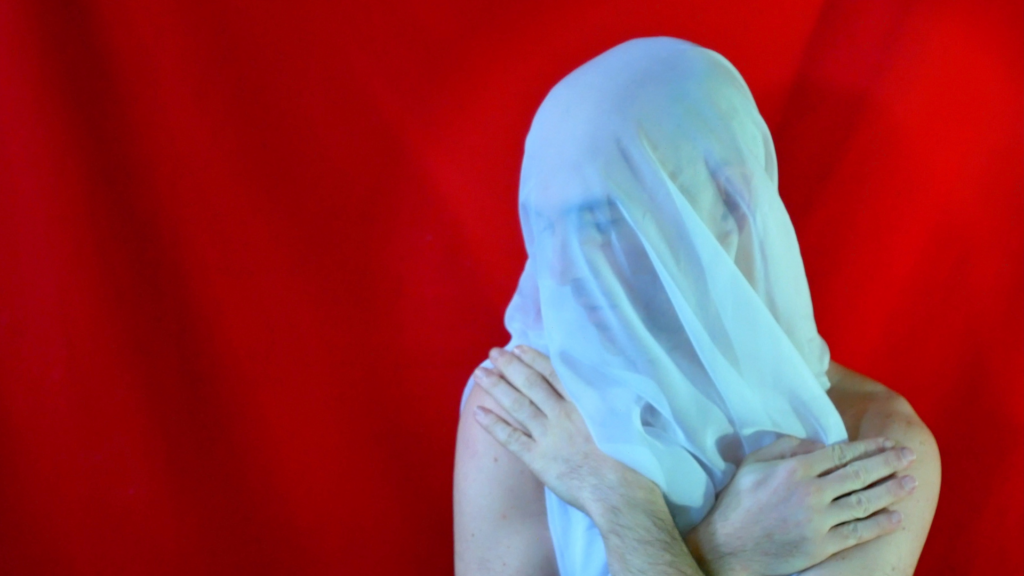
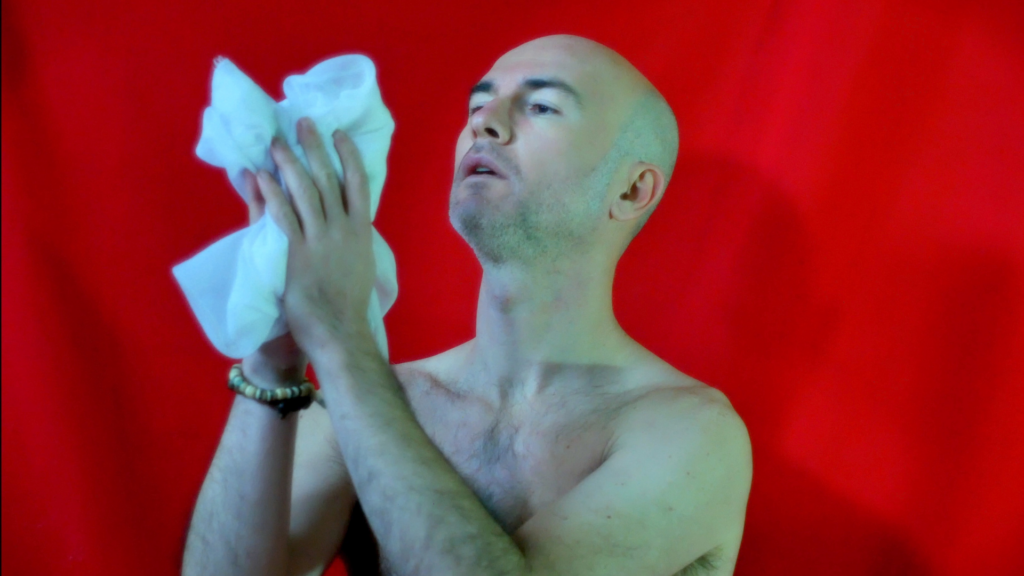
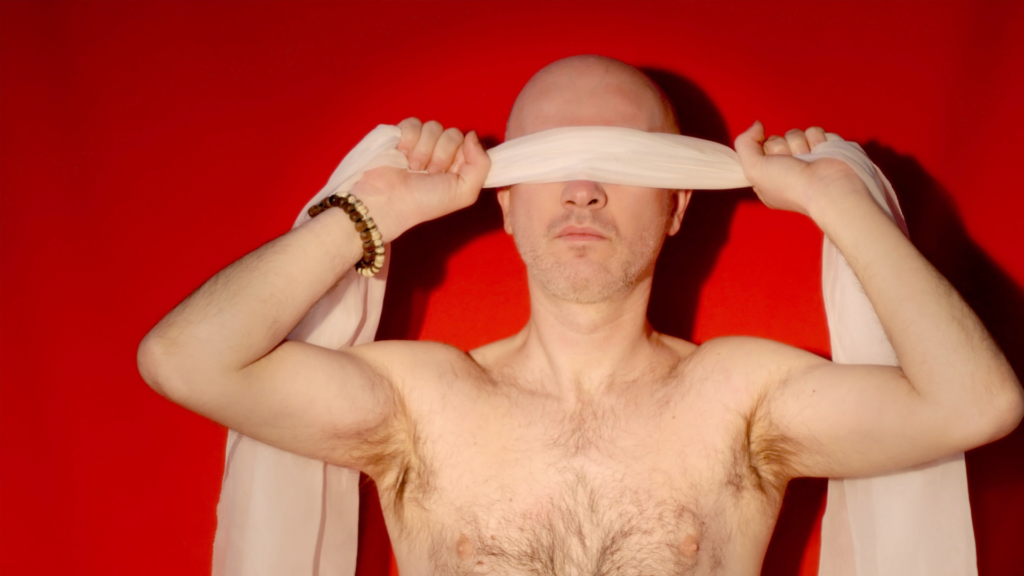
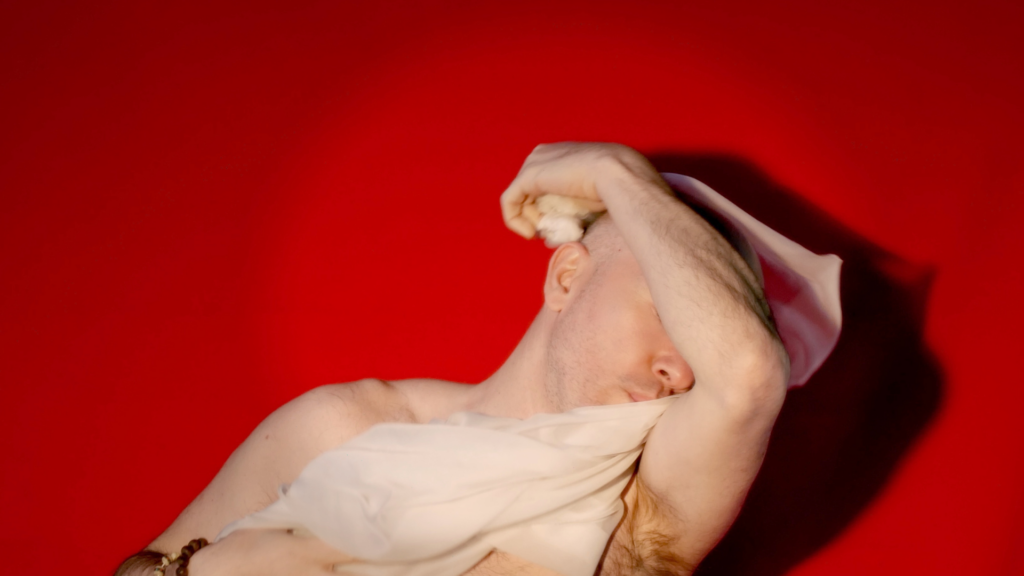
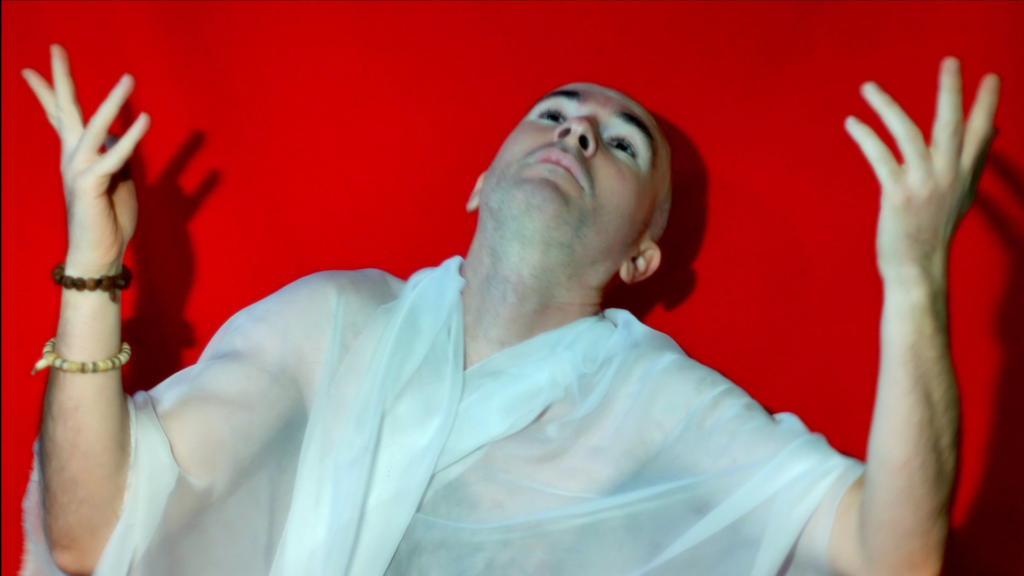
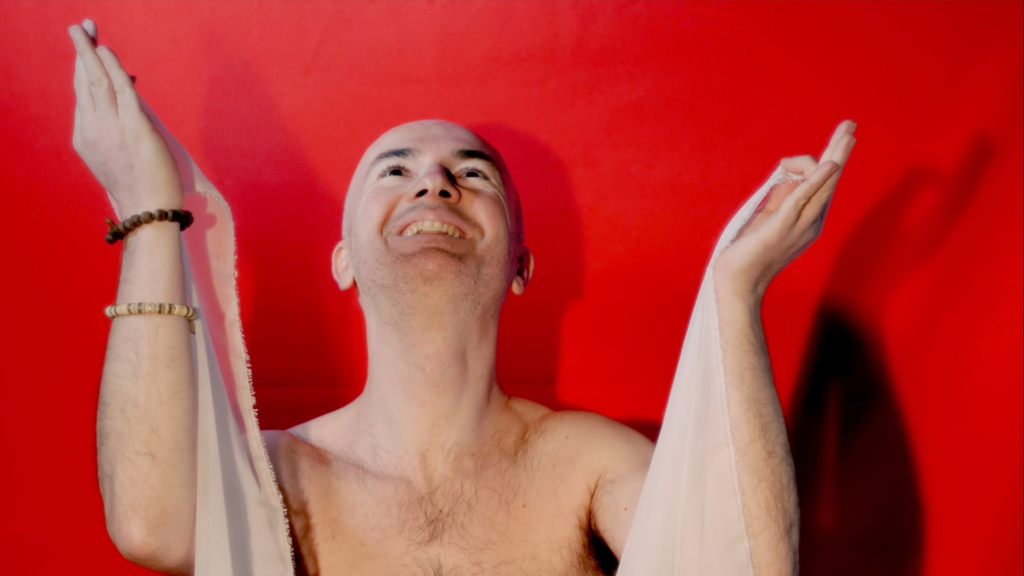
Compianto | Agonia | Derisione | Pietà | Ascensione | Resurrezione
The use of dark colours and shadows creates an intimate and claustrophobic atmosphere, amplifying the protagonist's sense of anguish. The soft light, however, offers a significant contrast: it becomes a symbol of a latent hope, a possibility of illumination that, although distant, remains present. The contrast between light and shadow is not only visual, but conceptual. Dipalma invites the viewer to reflect on the uncertainty that accompanies every process of transformation: where is the sun, the source of light and life? This silent question runs through the entire work, suggesting that the journey towards a new identity is often obscure and uncertain. Several interesting symbolisms can be found within the work. Firstly, the cloth that envelops the protagonist is a polyvalent symbol. It protects, but at the same time separates; it conceals, but does not erase man's vulnerability. It is an image that recalls the human condition, suspended between the need for protection and the desire for expression. Moreover, the final fading of the body into the cross-like position suggests a spiritual and universal dimension. It is not a simple sacrifice, but a search for redemption and meaning, an opening to a possible rebirth. Finally, the work represents transfiguration not only as loss, but also as possibility. Tearing oneself does not mean annihilation, but opening up to a new form, to a new vision of oneself. The rhythm of the video is constructed in such a way as to suggest an upward movement, a progressive detachment from despair towards a higher dimension of awareness. This movement is not linear, but full of uncertainties and regressions, reflecting the complexity of the inner journey. The final fade-out, in which the ego eclipses behind a veil, closes the work with a powerful image: an identity that does not disappear, but is transformed, leaving space for a deeper and more authentic presence. Marco Balbi Dipalma demonstrates an extraordinary ability to combine the visual language of the Renaissance with contemporary digital techniques, creating a work that is both anchored in tradition and profoundly relevant today. The use of video as a medium allows Dipalma to add movement and temporality to a static theme such as transfiguration, transforming it into a dynamic and engaging process. This choice amplifies the involvement of the spectator, who finds himself immersed in an all-encompassing visual and emotional experience. "Trasfigurazione" by Marco Balbi Dipalma is a work that transcends mere visual representation to become a sensory and conceptual experience that invites the viewer to confront the complexity of human identity. Through the use of powerful symbols, sombre colours, soft lighting and an ascending rhythm, Dipalma explores the conflict between loss and transformation, between mourning and rebirth. This 'visual prayer' stands out as a significant contribution to the contemporary digital art scene, offering a universal reflection on the experience of change and the possibility of finding meaning in the darkness.
ART CRITICISM SONDRIO BIENNIAL 2024
SELF-PORTRAIT IN THE MIRROR: FRAGILITY
4K HOLOGRAPHIC VIDEO SCULTURE | 16:9 | PLEXIGLASS | DATAMOSHING | COLOUR | NO SOUND | DURATION 1:46 | 2023
Selezionato “Paratissma “Nice & fair – Show don’t tell!” 2024
Finalist expositivaart 2025
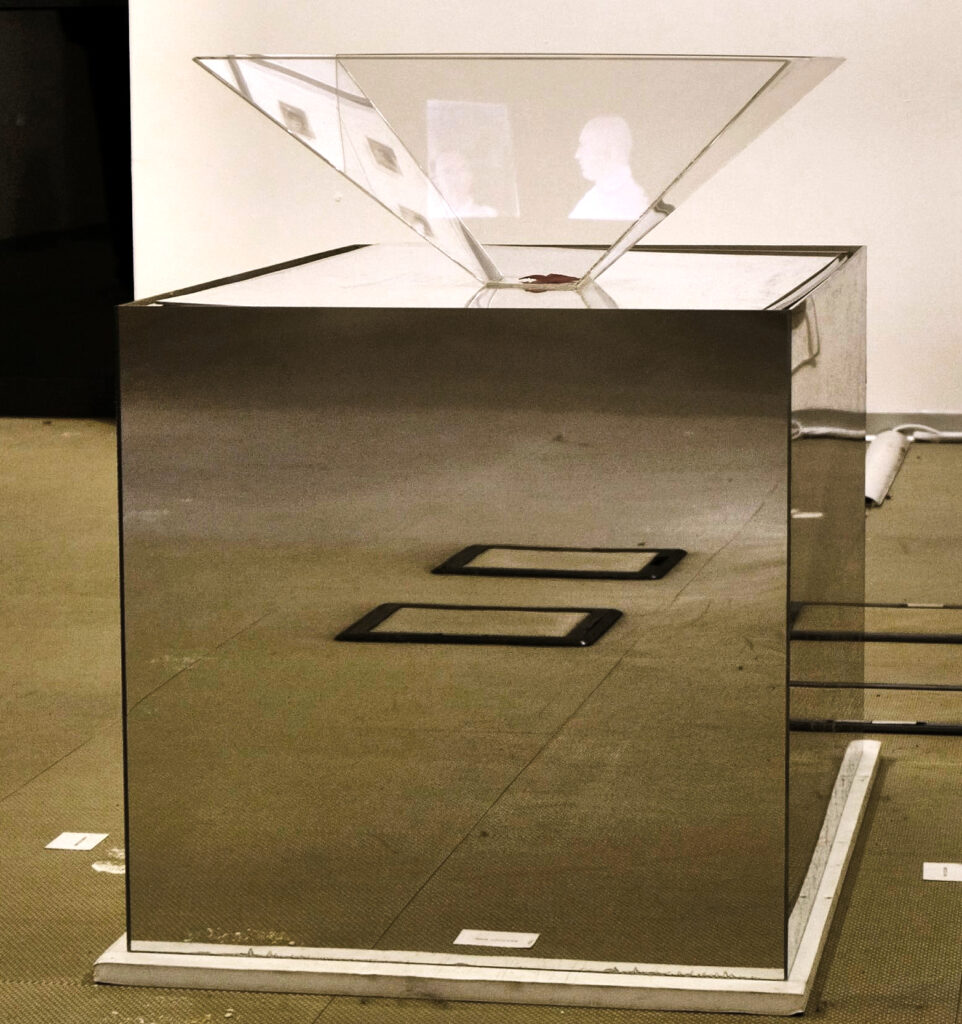
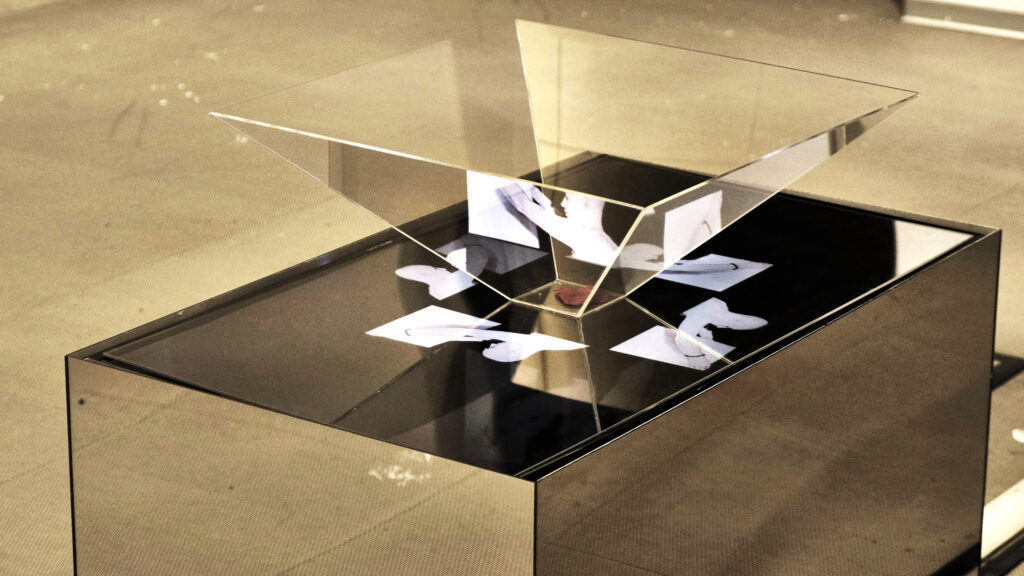
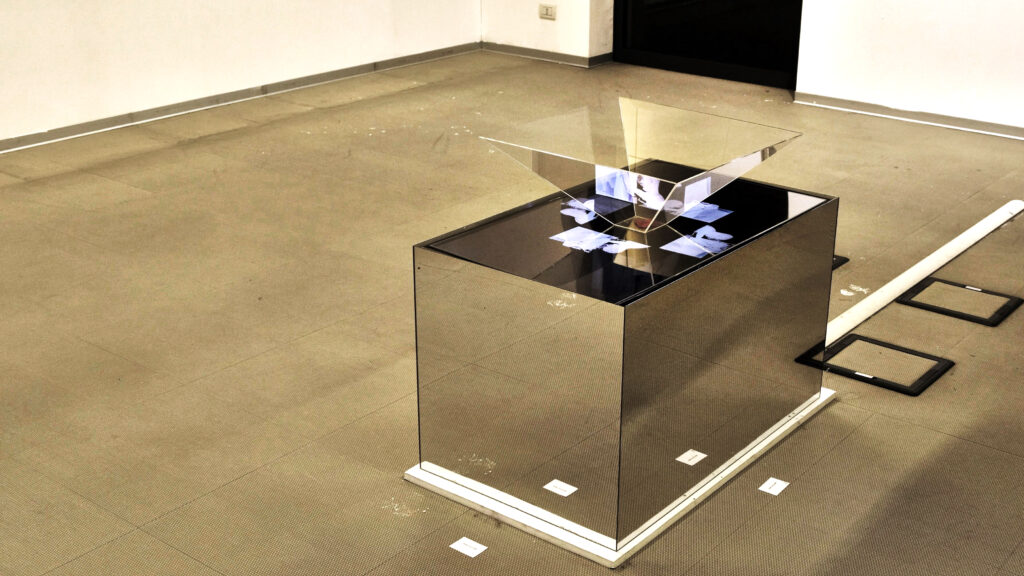
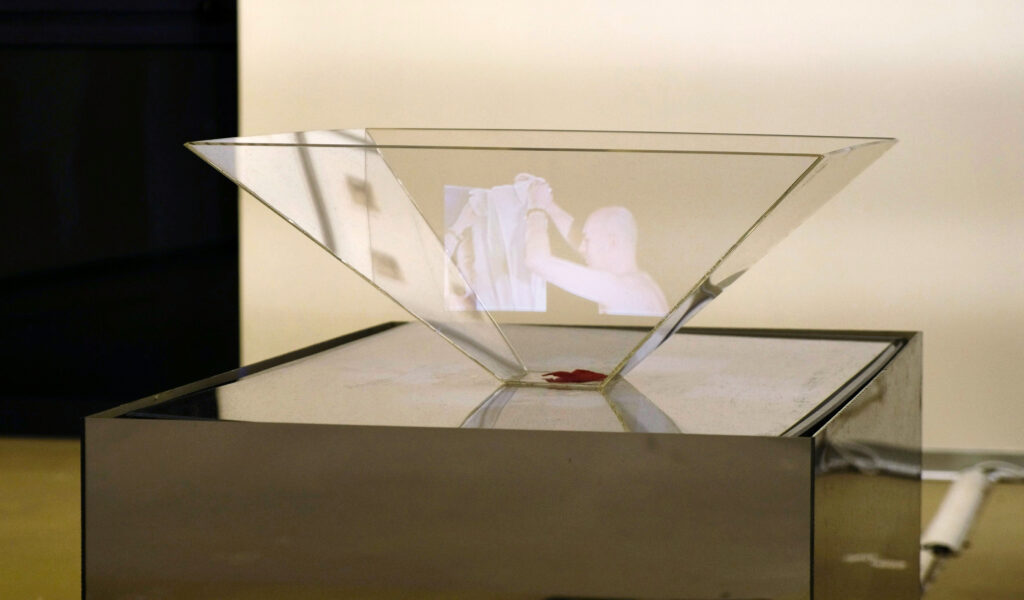
The self-portrait has no words, it expresses itself in silent contemplation of Self. The body reflected in the mirror reveals a lived space. The video reflects on the fragility of Being. I needed to see myself with my inner eye, to find an existential meaning after disenchantment. Scrutinise myself to open a renewed vision, beyond the veil, to be reborn. The projection of the body becomes a path to knowledge of the soul.
The datamoshing technique breaks up the figure into luminous matter. The jagged colours reveal the ambivalence of inner fragmentation. Being fragmented, expresses the pain of the loss of identity form, but at the same time fragmenting, as in a Buddhist meditation technique, is a practice to seek a broader vision of being. The body, painted in the mirror, evokes its presence in space and connotes itself as a 'spatial self'. In the duality of the reflection it represents a locus amoenus, it appears as "the other than me", "the elsewhere."
The camera, in the relationship of gaze with the mirror and the observer, poses a paradox: the camera reinforces identity, making it a threshold of passage towards the relationship to the "you that can be me". The body in the mirror is the fragile touch of the soul. An inner space that unites us. In the mirror, the human figure opens itself to dialogue with the Being.
MARCO BALBI DIPALMA | ARTIST
Perceiving physicality, not only as a material dimension, but as a veritable language of glimpses and fissures, he highlights its ambivalent entity suspended between presence and absence. In investigating the existential and psychological realm of human beings, Marco Balbi Dipalma weaves autobiographical experiences, exploring pain as a source of knowledge and the power to transform relationships and spirituality. In the video installation Self-portrait in the mirror: Fragility the artist stages a self in which the mirror is not just a physical double, but is transformed into an ego that opens up to the being of the other: the mirror thus becomes a means of discovering and questioning identity. It is not just an exploration of the ego, but an investigation into shared fragility, in a continuous relationship between identity and otherness.
ELENA SILLITTI | CURATRICE
SELF-PORTRAIT IN THE MIRROR: PRIMARY LOVE
VIDEO 4k 9:16 | DATAMOSHING | SILENCE | COLOUR | PROJECTION ON CANVAS, WALL, LCD MONITOR 9:16 | 2:07 sec. | 2023
“Love loves and in loving always looks a little beyond what it has and possesses in its hands' M. Schaler 'Ordo amoris'
"Self-Portrait in the Mirror: Primary Love". investigates the heart as the dynamic affective centre of identity in order to open a metaphysical space, in search of an "ordo amoris", which gives meaning to the existential void and ethical value. With the symbolic action of opening one's Indian dress and touching one's chest with closed eyes in front of the mirror, the performer searches within himself, starting from his own body, for an axiological structure of love, in the discovery of an authentic vision of his own "I". The 'I' is reflected in the body as in a mirror. The reflected body connotes itself as ens amans, which seeks to understand the logic of the heart in order to recognise the intimate constitution of its being. The datamoshing technique emphasises the act of touching and penetrating the heart centre to advance the reflected identity in its beauty, building it up as a world of values of Love. In the act of loving, identity is stripped bare and seeks a deeper, ontological fulfilment in Being. The self-portrait in the mirror investigates with the eye of the heart the ethos and culture of Love: the self that opens up to the you, towards a primary love.